
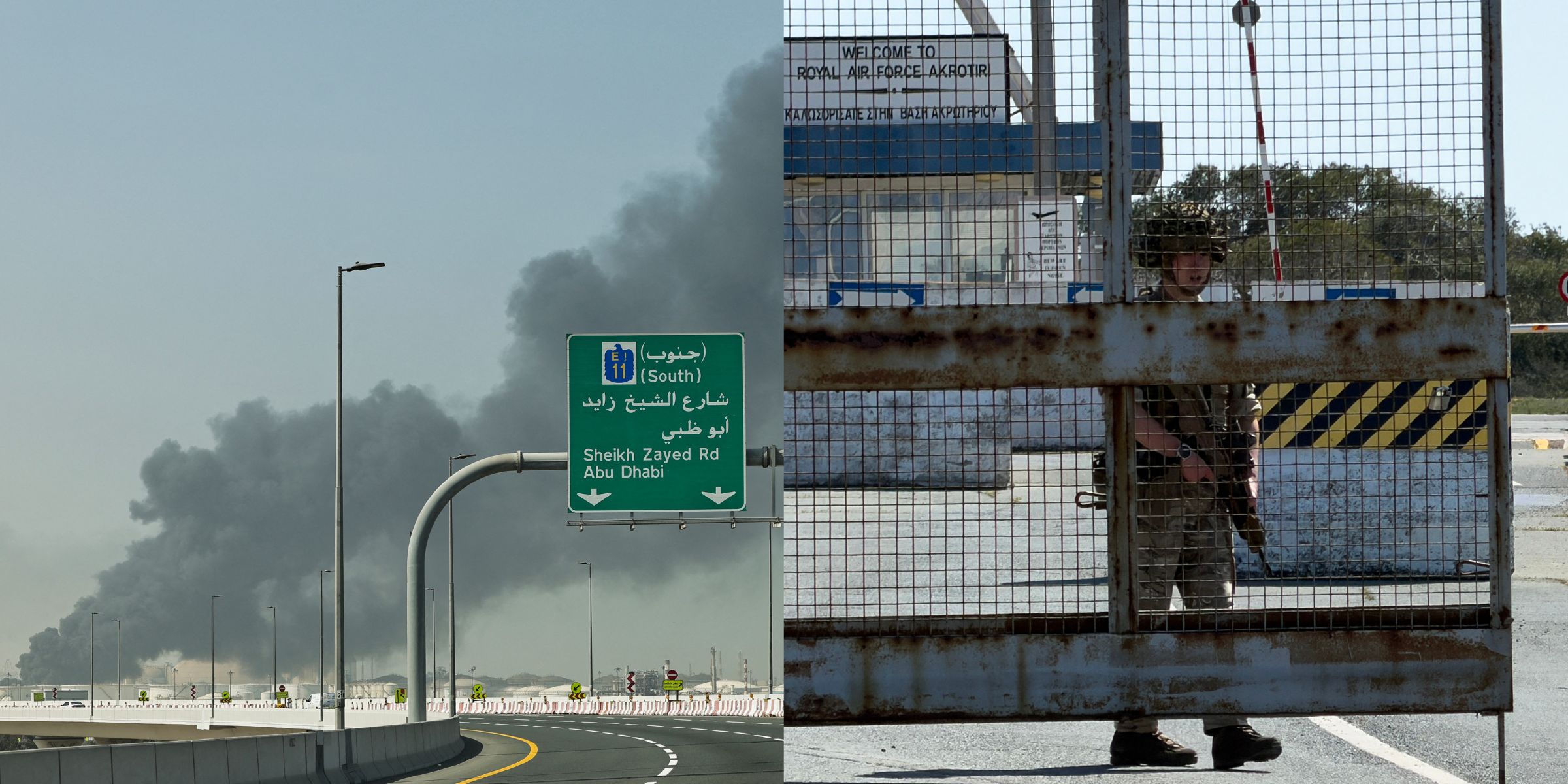
Latest Updates After British Personnel Came Under Attack amid Iran-Linked Escalation

Hundreds of Britons now find themselves stranded, terrified and alone as the Middle East spirals into war — and the fallout is hitting closer to home than many ever imagined.
British families in Cyprus were jolted awake on Sunday night, 1 March, as a drone attack struck RAF Akrotiri, prompting immediate evacuations of military relatives and children from the base — which houses two schools. The attack came amid escalating violence after joint US-Israel strikes on Iran sparked retaliation across the region.
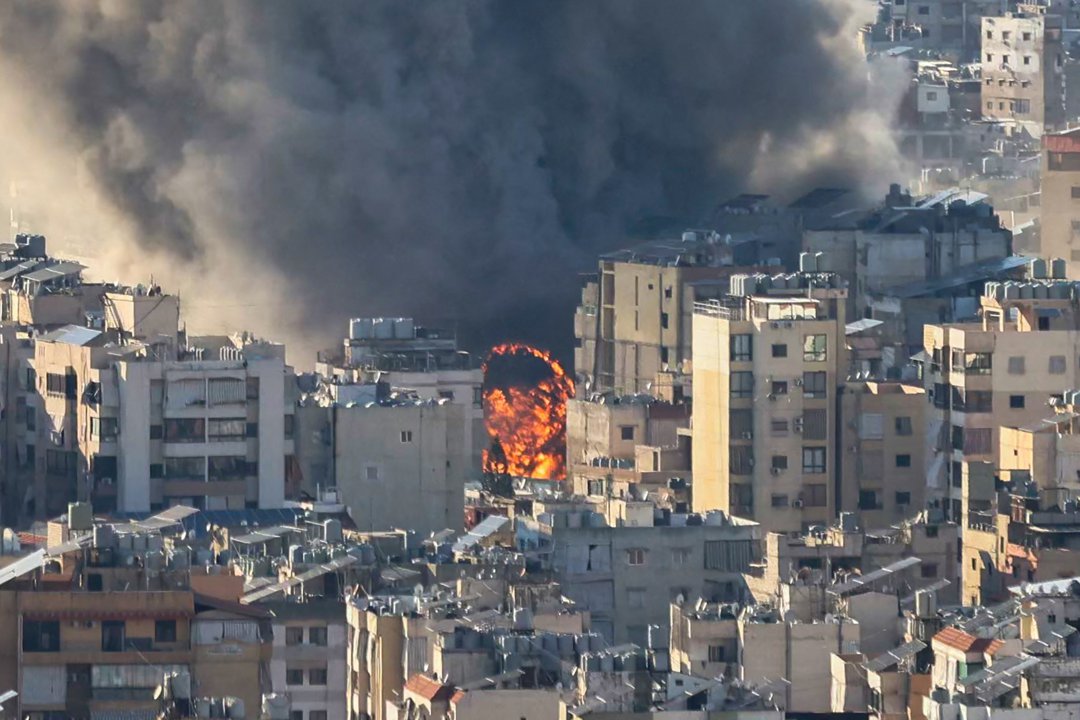
Smoke plumes billow following Israeli bombardment on Beirut's southern suburbs on March 2, 2026. | Source: Getty Images
Just after midnight local time, a one-way attack drone slammed into the runway at the RAF airfield. A source on base confirmed, "There is damage to the airfield."
The Ministry of Defence was quick to respond, saying, "The safety of our personnel and their families is our absolute priority." Though no injuries were reported, British military families were immediately relocated to alternative accommodation.
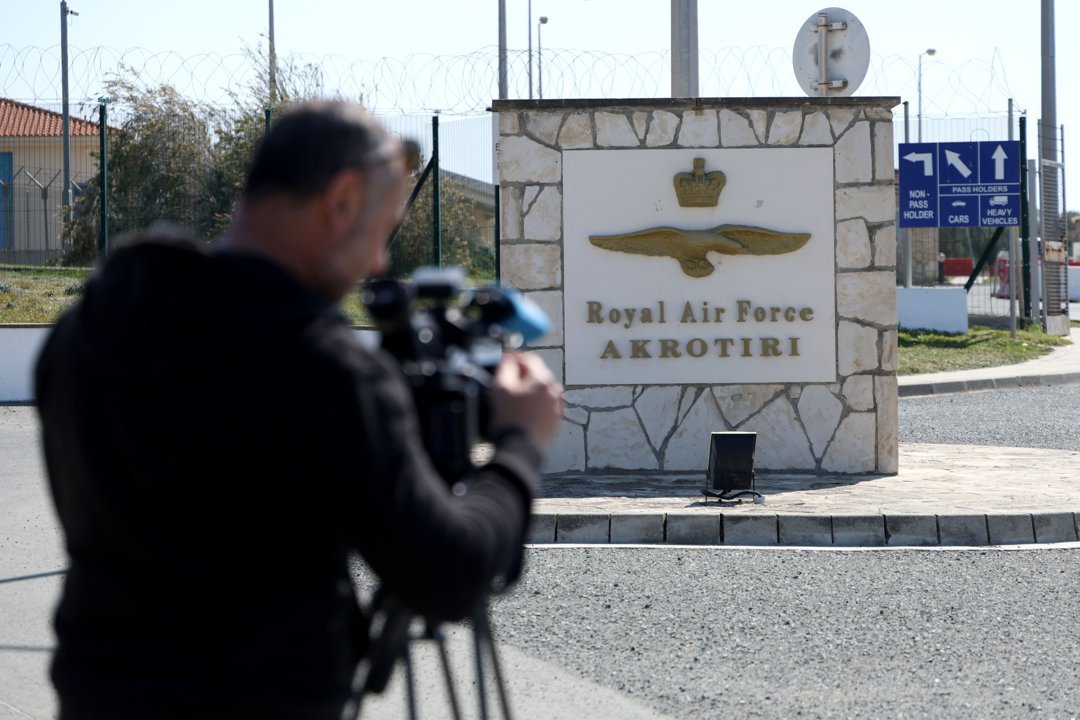
Media seen outside RAF Akrotiri on 2 March 2026 in Akrotiri, Cyprus. | Source: Getty Images
It's unclear whether the drone came from Iran directly or one of its heavily armed proxies like Hezbollah. Several other missiles were intercepted in real time by RAF Typhoon jets, scrambled mid-air to defend the base as the threat unfolded.
Residents were sent a terrifying alert, instructing them to "take cover" and avoid windows, sparking chaos and confusion across the community.
The chilling message read, "There is an ongoing security threat. Please return to your homes and stay inside until further notice. Move away from windows and take cover behind or beneath substantial, solid furniture. Please await further instructions."
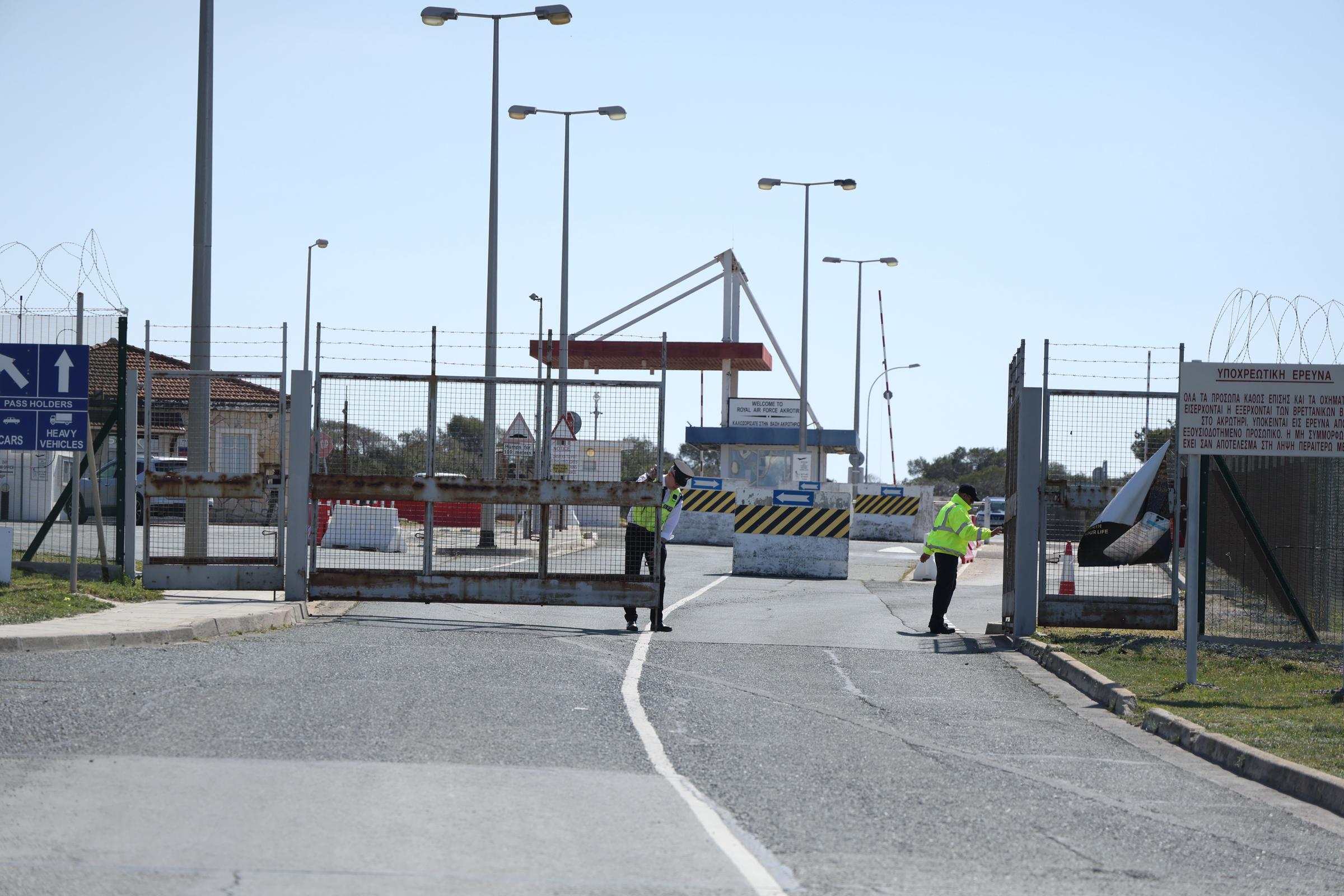
Security personnell is seen at RAF Akrotiri on 2 March 2026 in Akrotiri, Cyprus. | Source: Getty Images
Across the Middle East, holidaymakers are living in fear as Iranian missile strikes continue for a third day — grounding flights, stranding travellers and turning dream getaways into nightmares.
Gary, 57, and Laura, 48, from Suffolk, were enjoying sunshine in Doha when the attacks began. "It's turned into a nightmare from hell," said Gary, a partner at a global firm. Laura, a director at a SaaS company, added, "We're packed, ready to go. Missiles are going out all the time. Complete uncertainty."
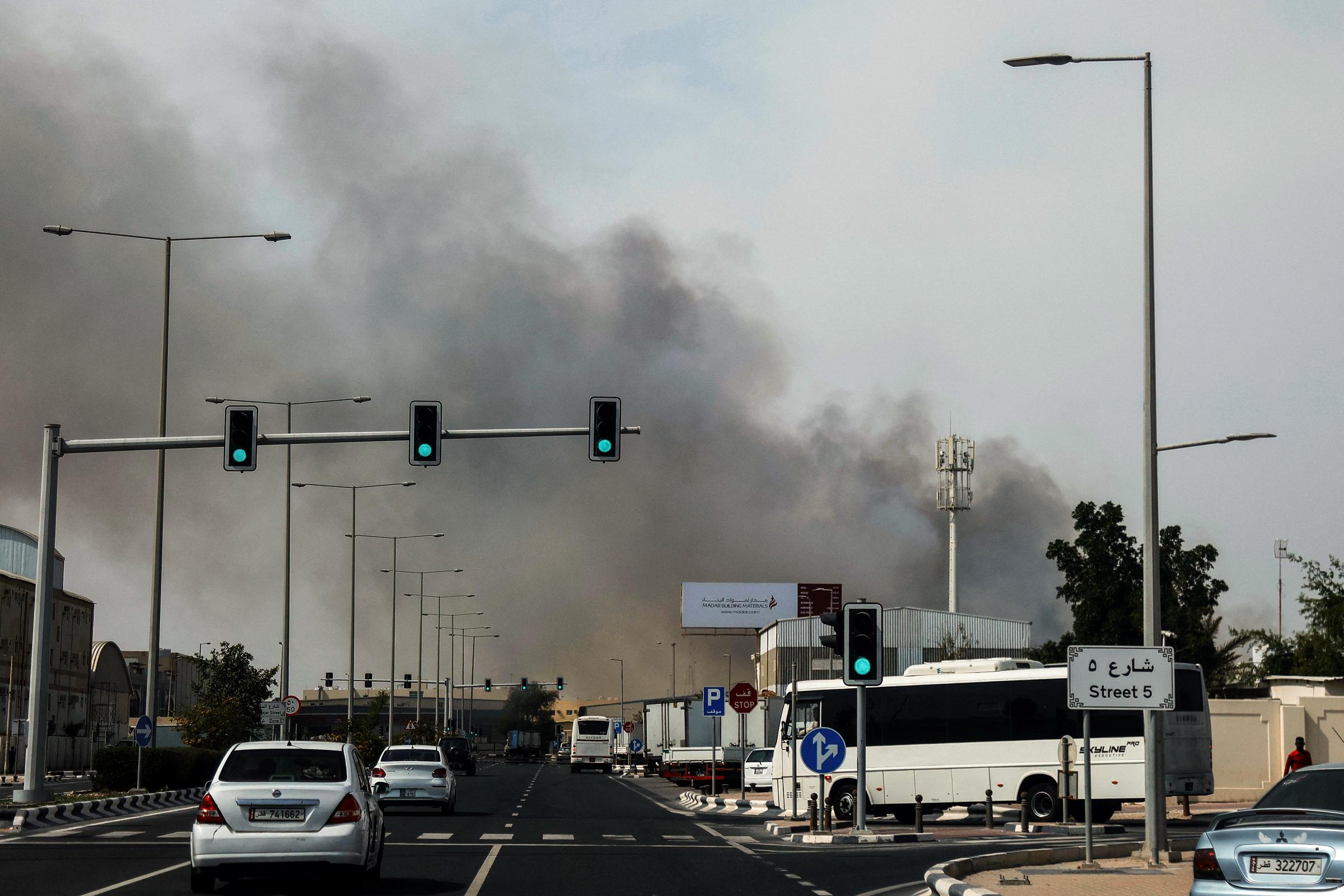
Motorists drive past a plume of smoke rising from a reported Iranian strike in the industrial district of Doha on 1 March 2026. | Source: Getty Images
In Dubai, engineer Terry, 55, and his wife Joanne, 52, were poolside when a missile exploded overhead. "We were all told to get inside," Terry recalled. "There was an explosion a couple hundred feet in the air."
Their street now lies deserted. To make matters worse, their insurance company, airline and travel provider have refused to help, leaving them to fend for themselves.
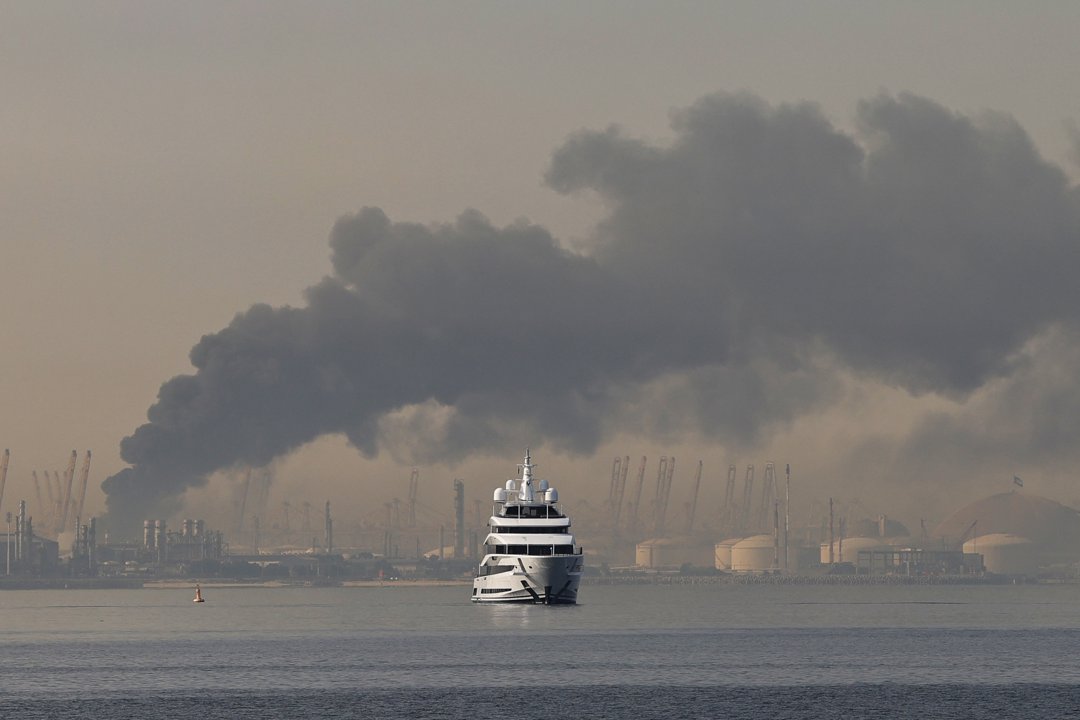
A yacht sails past a plume of smoke rising from the port of Jebel Ali following a reported Iranian strike in Dubai on 1 March 2026. | Source: Getty Images
Alison, 71, and Gul, 70, had flown into Dubai for a joint holiday and birthday celebration. Now they're stranded and shaken. "It was really scary. We were shaking," Alison told The Independent, as explosions echoed across the city.
The couple had checked travel advisories before flying on 25 February — there were no warnings. Now, they're desperate to get out. Though they insist they're trying to stay calm and there is no panic, both say they want nothing more than to return home — and soon.
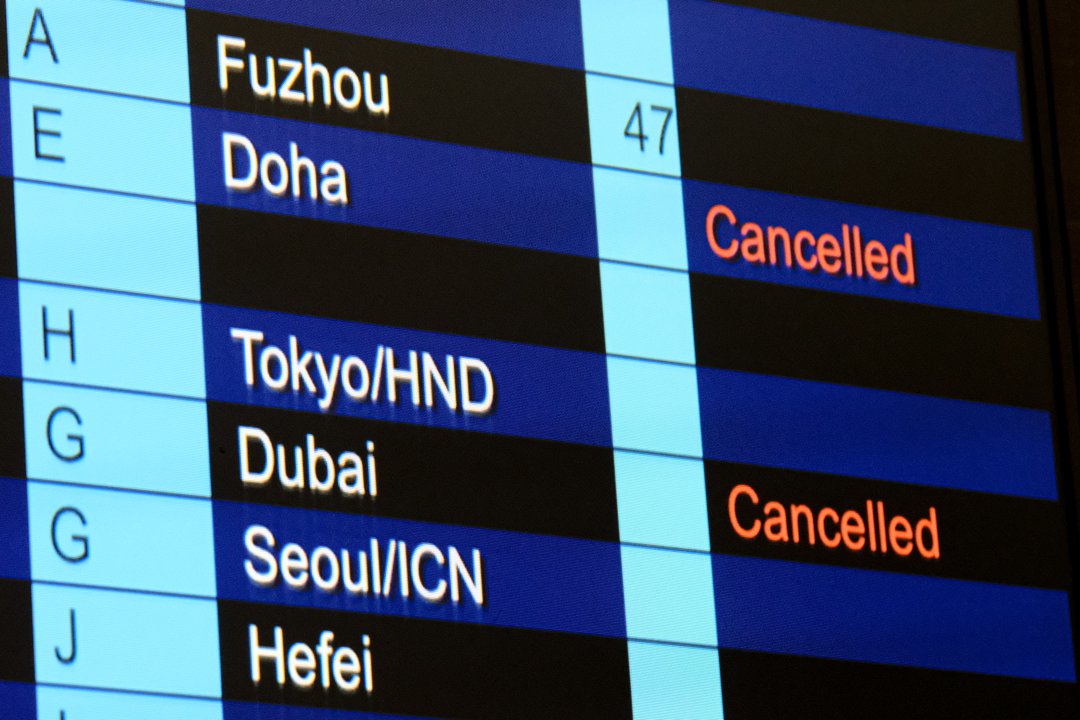
Cancelled flights to Dubai and Doha shown on flight information display at Hong Kong International Airport on 2 March 2026 in Hong Kong, China. | Source: Getty Images
Salli-J is among those left in total limbo. "Me and my family are stuck in Dubai," she said. "I'm here with my partner, two sons and friend not knowing when we can get home."
Like many others, her insurer refuses to cover the disruption, citing that the incident is "classed as terrorism or war". No aid has come from the airline or the Foreign Office.
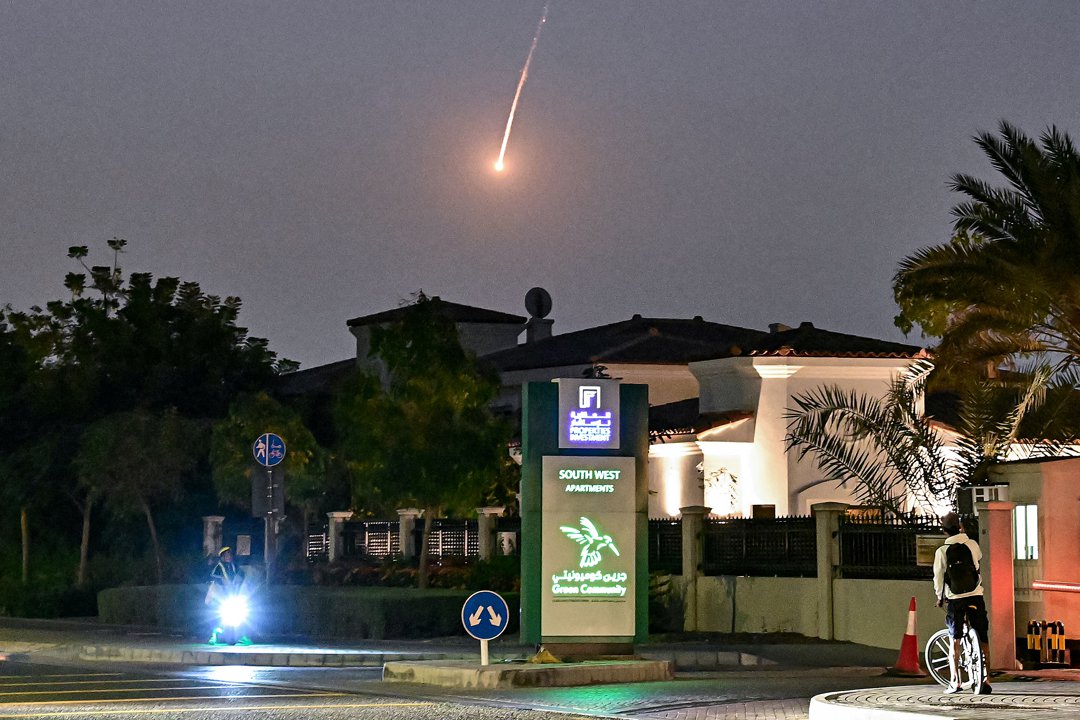
A cyclist watches as a projectile falls over Dubai on 28 February 2026. | Source: Getty Images
Claire, 42, and Chris, 47, are desperate to return to the UK following the death of Claire's mother, Fiona, who passed away from motor neurone disease (MND) on 7 February. The couple had travelled to Dubai ahead of the funeral and are now trapped by the escalating crisis, leaving Claire struggling to support her grieving sister from afar.
"There were a couple of intercepted missiles overhead, very loud," Claire said, describing the terrifying night-time explosions.
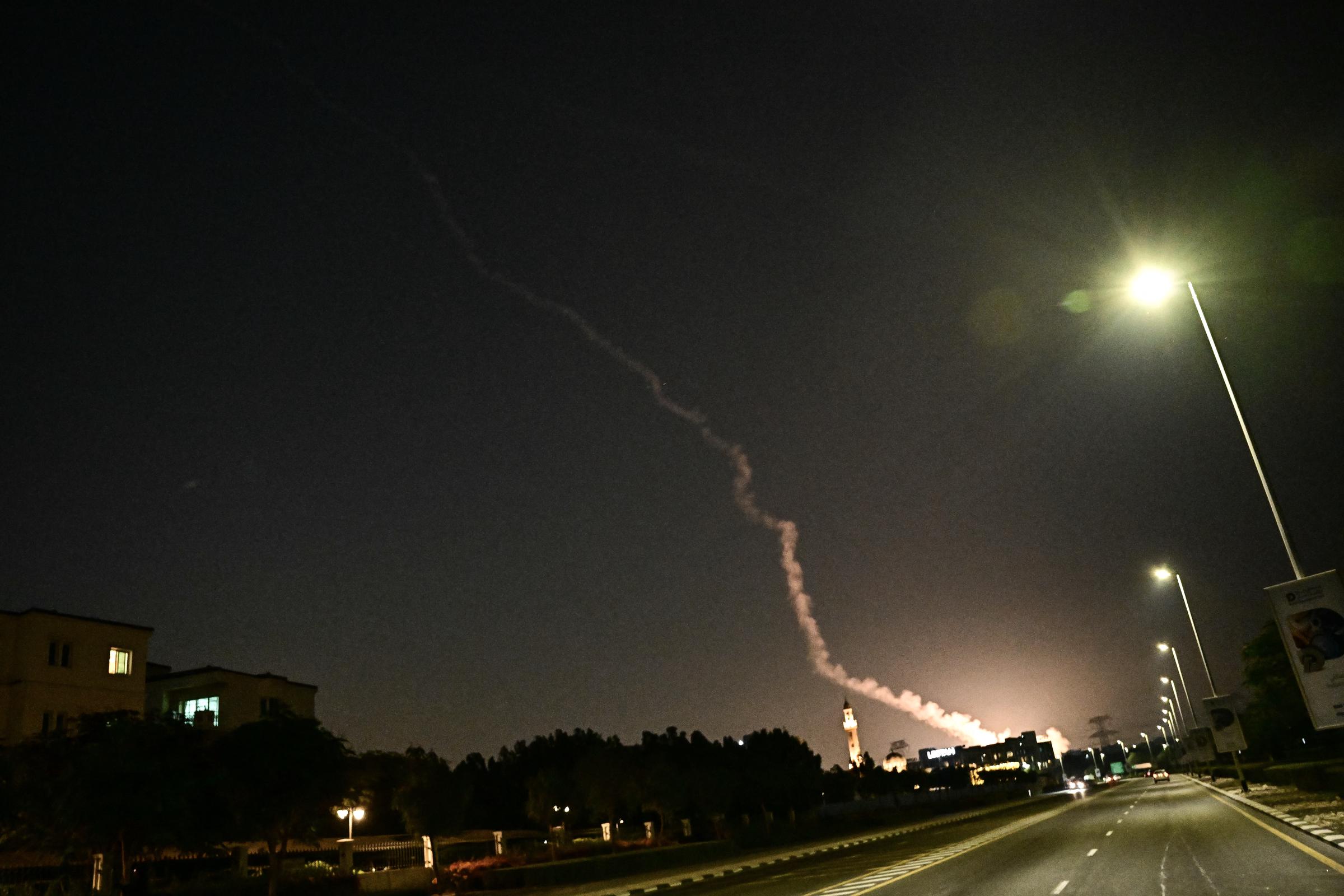
Smoke from a reported rocket interception is seen in the sky over in Dubai on 28 February 2026. | Source: Getty Images
Despite the chaos, she added, "The local government has one of the most sophisticated defence systems in the world, so we are probably better off here than we would be in the UK if we started being attacked."
The pair have already spent around £2,000 trying to book earlier return flights for Wednesday and Thursday, hoping to make it back in time for the funeral. They've also had to cancel events at their pub, The Wheatsheaf Inn in Braunston, to help staff cope with their absence.
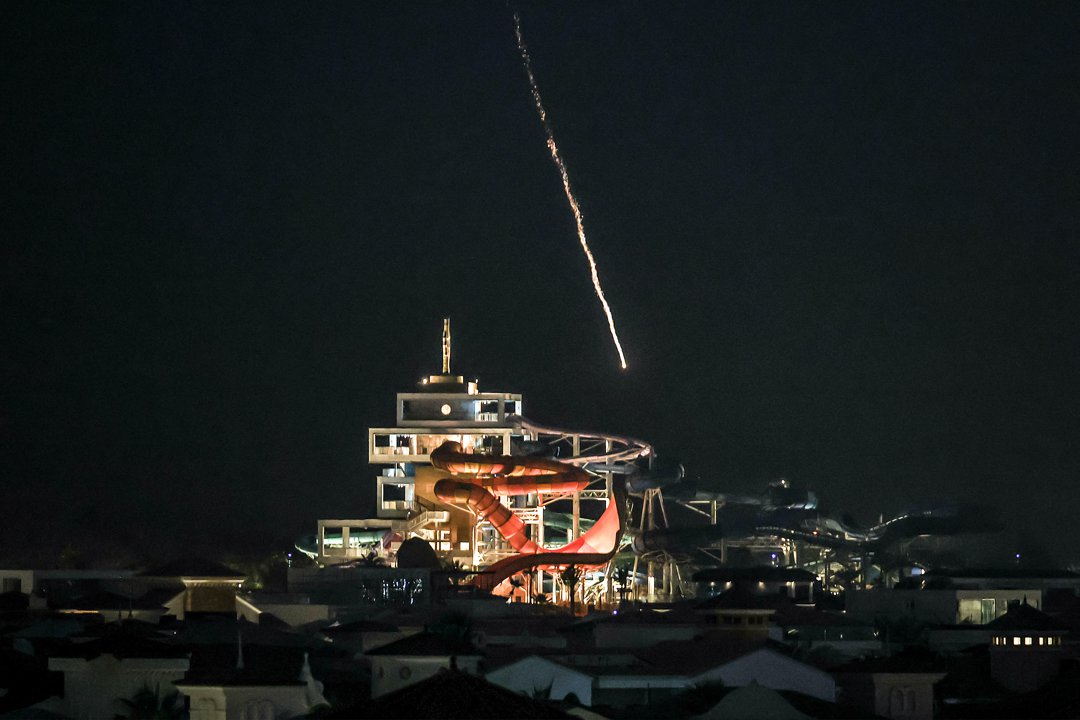
An intercepted projectile falls into the sea near Dubai's Palm Jumeirah archipelago on 1 March 2026. | Source: Getty Images
James, 31, from Galashiels, and his girlfriend Rebecca, 28, were celebrating her birthday in Business Bay, Dubai, when explosions began. "I've hardly slept. I'm in fight or flight mode," said James. "One of the nights, we got an alert saying 'incoming missiles, take shelter'. That was frightening."
Like many, they've had no guidance on what to do — only chaos and fear. "There is no word of what we should do in this situation," James said.
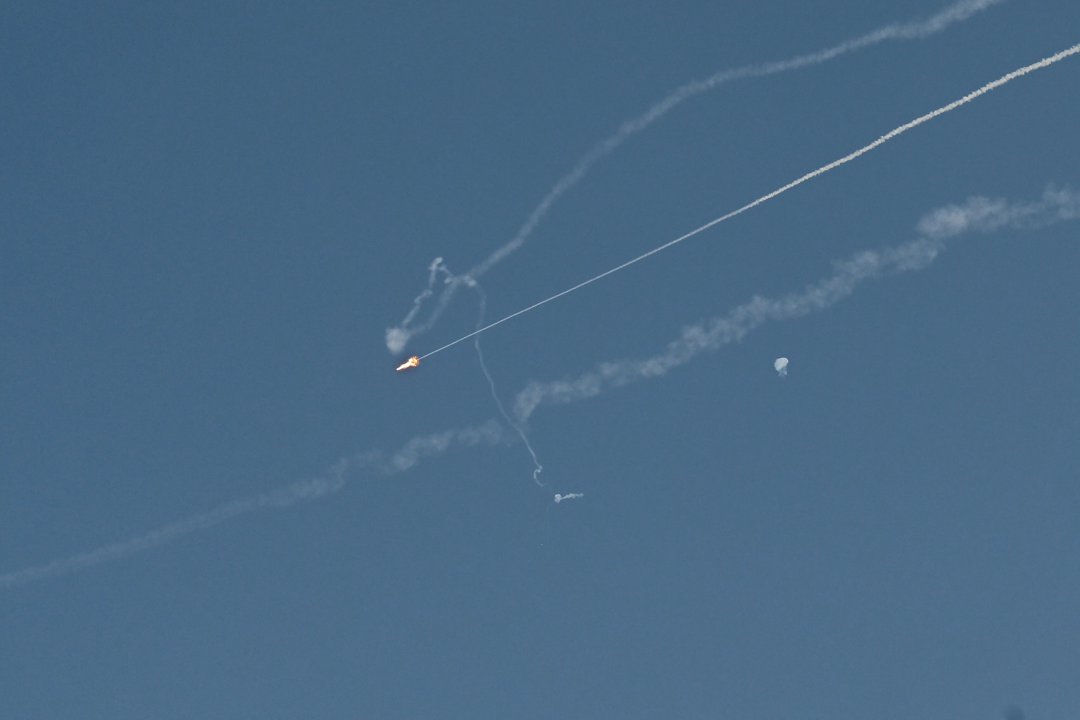
Explosions from the interception of an Iranian projectile are seen in the sky over Dubai on 1 March 2026. | Source: Getty Images
Nick, 62, and Joanne, 61, from West Sussex, were nearing the end of their bucket-list holiday in Dubai when the skies erupted.
Now they've extended their seven-day stay, paying extra to sleep in the lobby of their high-rise rental, terrified to return upstairs. Their cost? 400 AED — or £81 per night — with no end in sight.
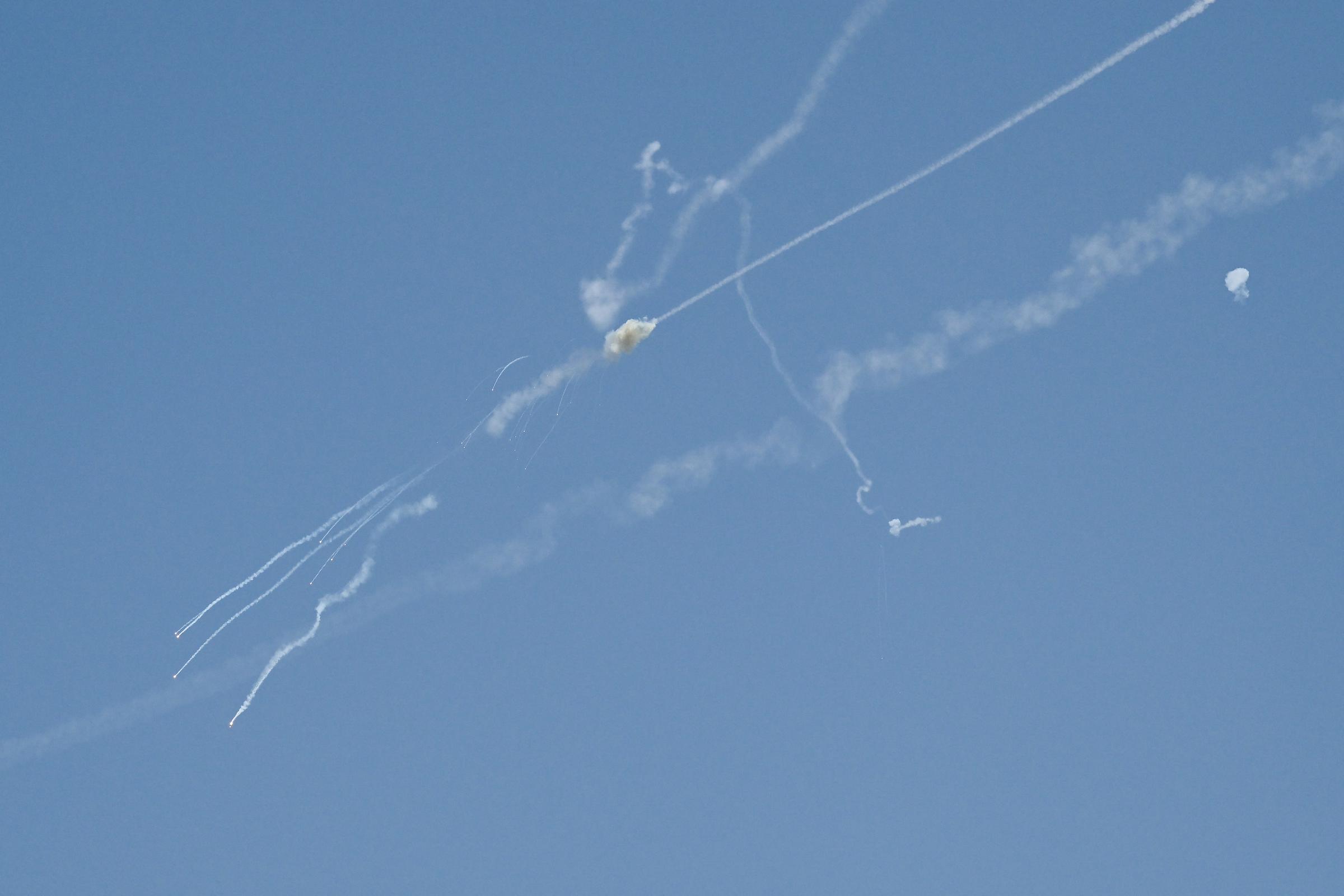
Explosions from the interception of an Iranian projectile are seen in the sky over Dubai on 1 March 2026. | Source: Getty Images
Matthew, 42, from Liverpool, was standing just six feet from a window when an explosion rocked the Fairmont Palm where he was staying with wife Layla, 41, and their three-year-old son Jenson.
"Missiles were flying overhead and being intercepted," he said. "If we stayed still, we were sitting ducks. There was that much fear and that much panic — we were going off instinct, really."
The family had just arrived in Dubai for their long-awaited honeymoon.
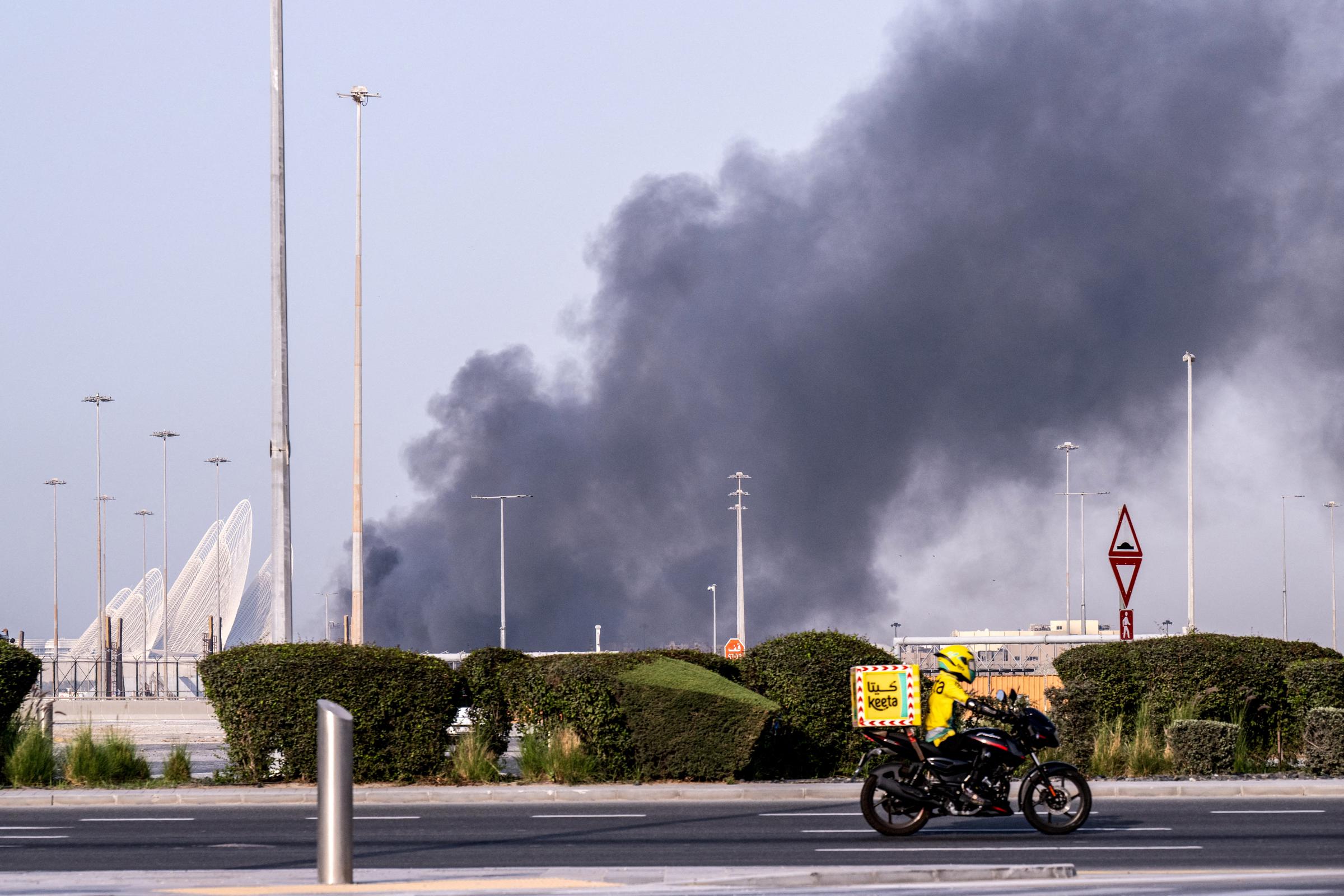
A food delivery bike drive close to a plume of smoke rising from the Zayed Port following a reported Iranian strike in Abu Dhabi on 1 March 2026. | Source: Getty Images
Muhammad, 31, an NHS doctor from Colchester, had just landed in Dubai on a layover to London Stansted when missiles were launched across the UAE. "I was in disbelief," he said. "My brother messaged me from Pakistan and said the US and Israel had attacked Iran. The conflict is spreading."
With flights still grounded and no word from airlines or officials, Muhammad — like tens of thousands of others — is now stranded.
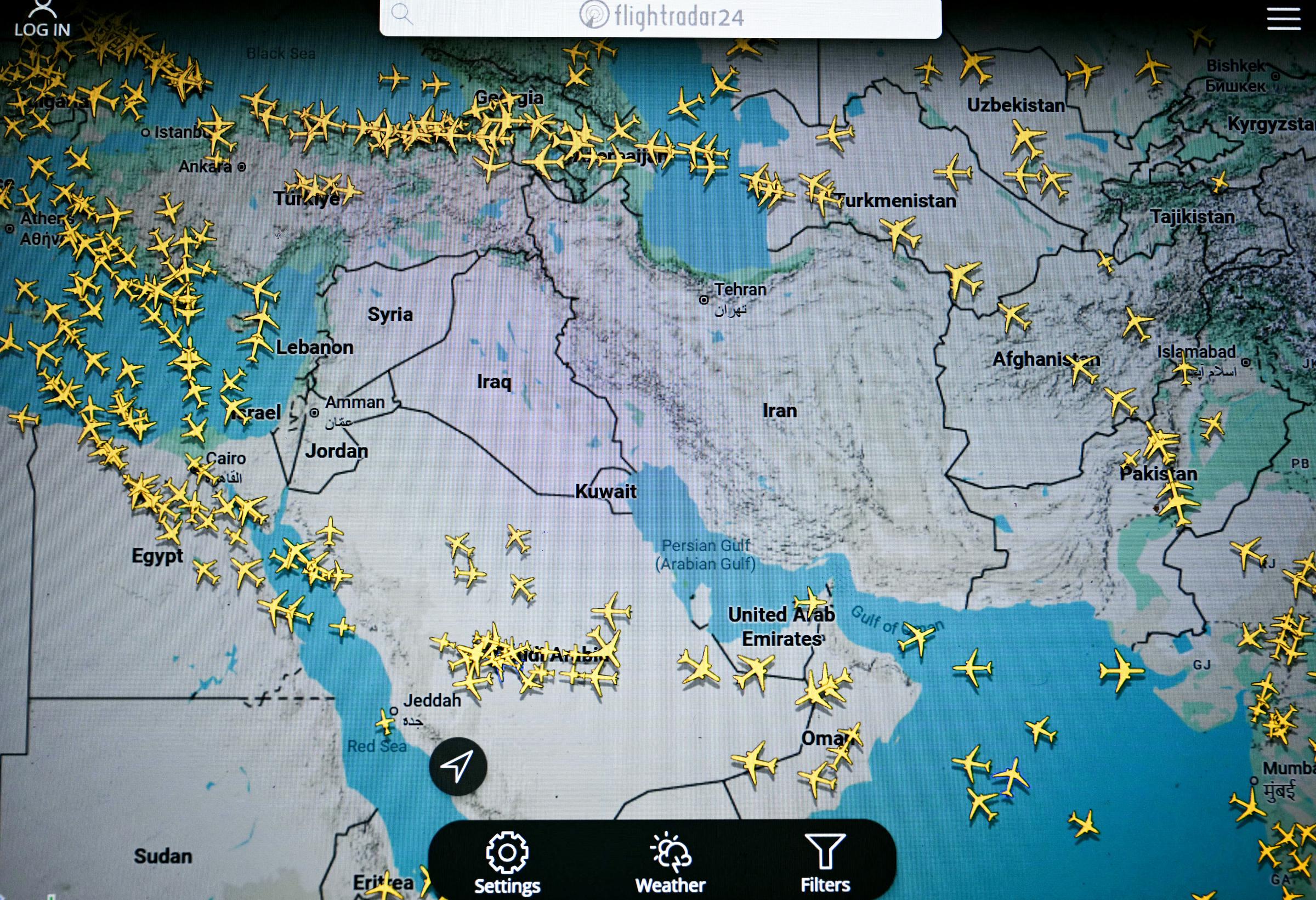
This photograph, taken in Paris on 1 March 2026, shows a page on the Flightradar 24 website displaying civilian flights avoiding the Iranian and Iraqi skies. | Source: Getty Images
Travellers have admitted they fear they could be stranded in Dubai with no clear way out, unsure when — or if — they will be able to return home.
With over 300,000 Britons believed to be in countries now directly targeted by Iran, the UK government is scrambling to respond. Sir Keir Starmer said officials are "looking at all options to support our people", but passenger flights remain largely suspended.
For British citizens and their families — from military bases in Cyprus to high-rises in Dubai — one truth is clear: This is no longer just a regional conflict. Britons are caught in the crossfire — and they need a way out.