
Separated from His Mother as a Child: Mo Farah’s Emotional Story – And Rare Photos of His Real Family

The Olympic champion's emotional confession about his childhood trauma has gripped audiences, but beyond the pain lies a powerful story of survival, identity, and reunion — with glimpses of his real family waiting at the end.
Sir Mo Farah is currently appearing on "I'm A Celebrity…Get Me Out Of Here! South Africa," where a powerful moment in which he revealed a deeply personal truth to his campmates was shared on the show's official Instagram page on 9 April 2026.
In the emotional exchange — captured in a video waiting for you at the end of this article — the Olympic legend recounted how he had been trafficked to the UK as a child, a revelation that left those around him visibly stunned and in tears.
Born in Somaliland as Hussein Abdi Kahin, Farah explained that when he was four years old, his father lost his life in the civil war, tearing his family apart. With eight children to care for amid the chaos, the four-time Olympic champion's mother found herself unable to cope.
Farah recalled being told that a relative in Holland would take him in, only to find the reality was something very different. "At that moment, we was just like, 'Yeah, we're gonna go and see my relative of mine,' but it wasn't the case," he shared.
Farah had believed, he told the camp, that this relative would eventually reunite him with the rest of his family. "Basically, I was child trafficked into the UK," he stated, recalling the bewilderment of being told by a woman upon his arrival that he now had a new name.
"My name's not Mo," he revealed. That same woman, he explained, had him do chores and look after her children.
The clip quickly sparked an emotional response online, with many reacting to the gravity of his story. One person stressed the severity of his experience, saying it was not domestic help but exploitation while asking, "And how old was he? That's child trafficking, not a cleaning service."
Another shared, "Heartbreaking.. Mo is such a gentle soul too. He truely is an inspiration in so many ways. An absolute treasure of a man. A gentleman. It's heartbreaking to know what he has endured... just like scarlett I cried. I can't imagine how scared he would have been [sic]."
One commenter typed more lightly, "I guess that's why he's so good at long distance [sic] running; the man had to get away!" Another simply wrote, "Give him his name back 😢."
A fifth netizen highlighted the emotional impact of hearing his family's perspective, adding, "His mom is so passionate, I almost cried hearing her tell her story."
This was not, however, the first time Farah had told his full story. In the BBC documentary "The Real Mo Farah," the four-time Olympic champion disclosed that he had been brought to Britain under a false identity at the age of nine, using the passport of a different child named Mohamed Farah.
"Most people know me as Mo Farah, but it's not my name, or it's not the reality," he said in the documentary. "The real story is I was born in Somaliland, north of Somalia, as Hussein Abdi Kahin. Despite what I've said in the past, my parents never lived in the UK."
Farah and his twin brother, Hassan, had been sent by their mother to live with an uncle in Djibouti. A woman visited the house repeatedly before eventually taking Farah to Europe, having told him he would be given a new name.
"As a kid, you never think beyond what you've been told," he shared. Once in Britain, she destroyed his only contact details for his relative right in front of him. "And at that moment, I knew I was in trouble," Farah recalled.
It was his PE teacher, Alan Watkinson, who eventually stepped in, removed Farah from that environment, and helped him apply for British citizenship. In time, the Olympian made contact with his mother again and was reunited with her.
Farah has said it was his own children who gave him the courage to finally speak. "Family means everything to me, and you know, as a parent, you always teach your kids to be honest. But I feel like I've always had that private thing where I could never be me and tell what's really happened," he shared.
His wife, Tania, recalled that in the year before their 2010 wedding, she had sensed gaps in what he had shared, saying there were "lots of missing pieces to his story" and that she eventually "wore him down with the questioning" until he told her the truth.
When the documentary aired, the Home Office confirmed that no action would be taken against him. "I've been keeping it for so long," Farah admitted. "It's been difficult because you don't want to face it."
Today, Farah's story stands not only as a harrowing account of survival but as a testament to resilience, truth, and the enduring power of family.
Now, with his past laid bare and his identity reclaimed, the focus turns to the people at the heart of it all — with rare photos of the Olympian's real family shared below, offering a glimpse into the roots he fought so hard to rediscover.
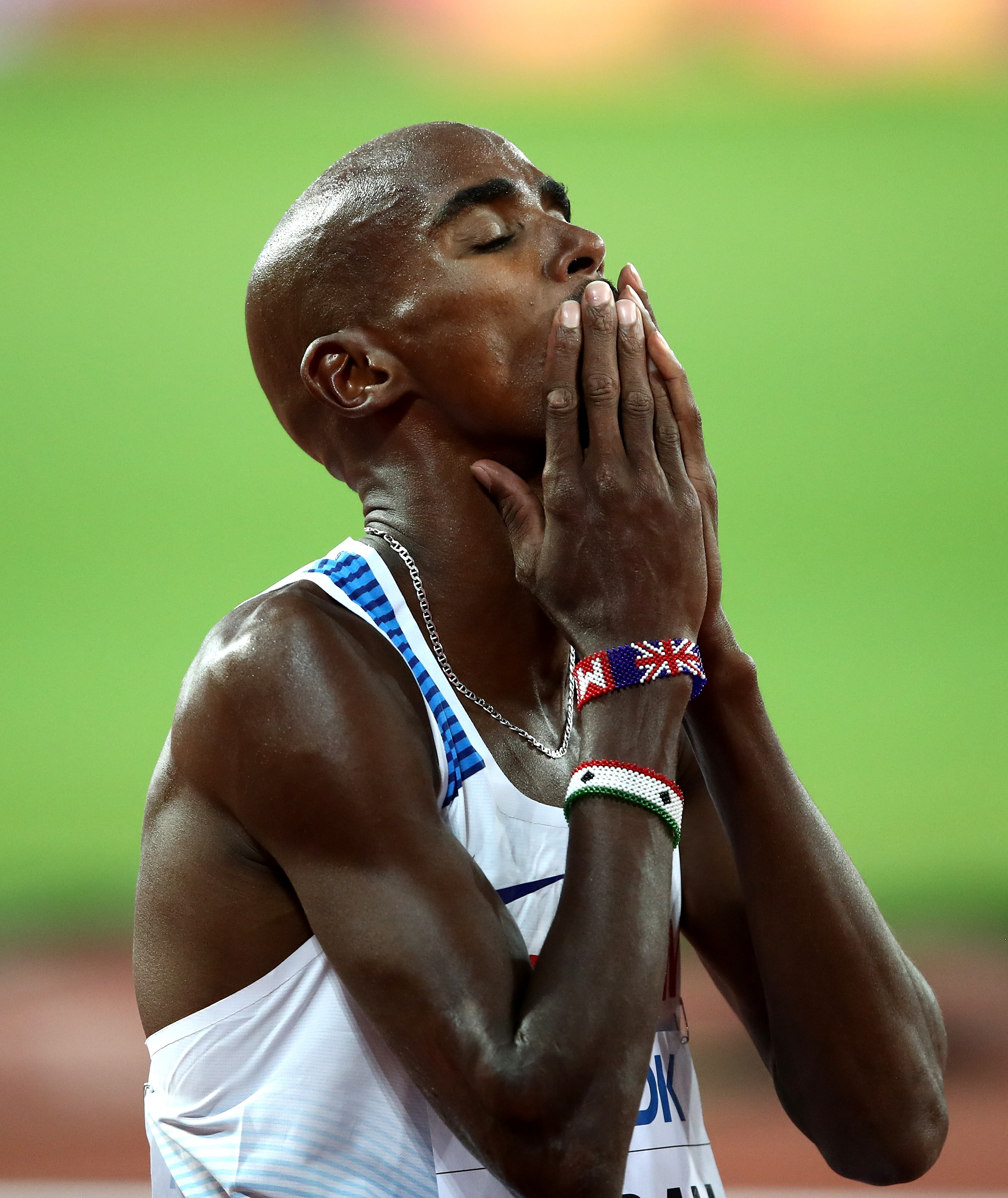
Sir Mo Farah closes his eyes and presses his hands to his lips after crossing the finish line in second place in the Men's 5,000 Metres final at the 16th IAAF World Athletics Championships, held at London Stadium on 12 August 2017. It was a rare silver for a man so accustomed to gold, yet the emotion on his face told a story far larger than any single race.
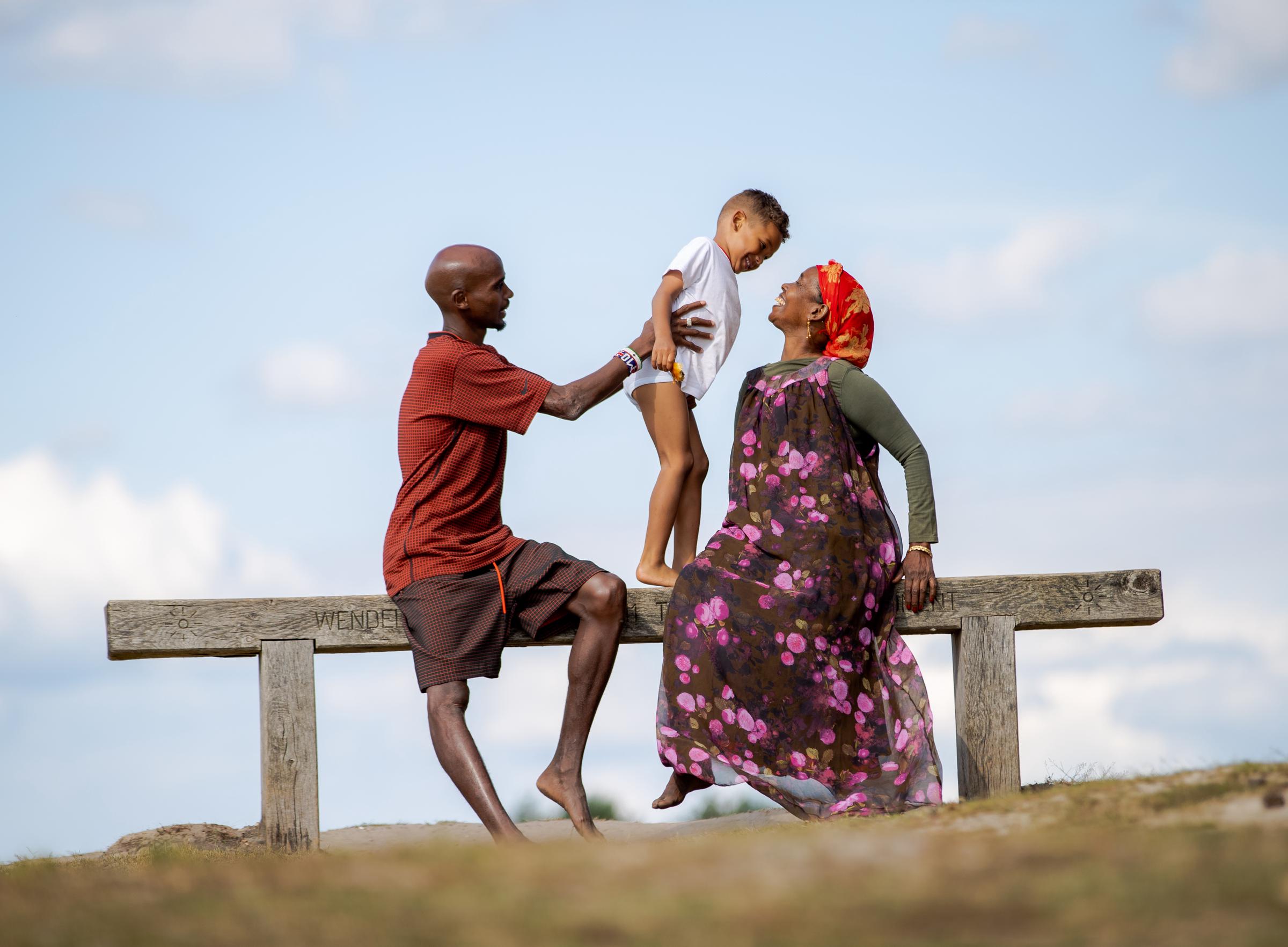
Sir Mo Farah sits on a wooden bench at Frensham Great Pond, Farnham, on 12 July 2019, holding his young son, Hussein, aloft between himself and his mother, Aisha, whose head is thrown back in laughter. It is a quietly extraordinary image — the little boy named Hussein, the same name Farah was born with and later had taken from him, now carried proudly by the next generation.
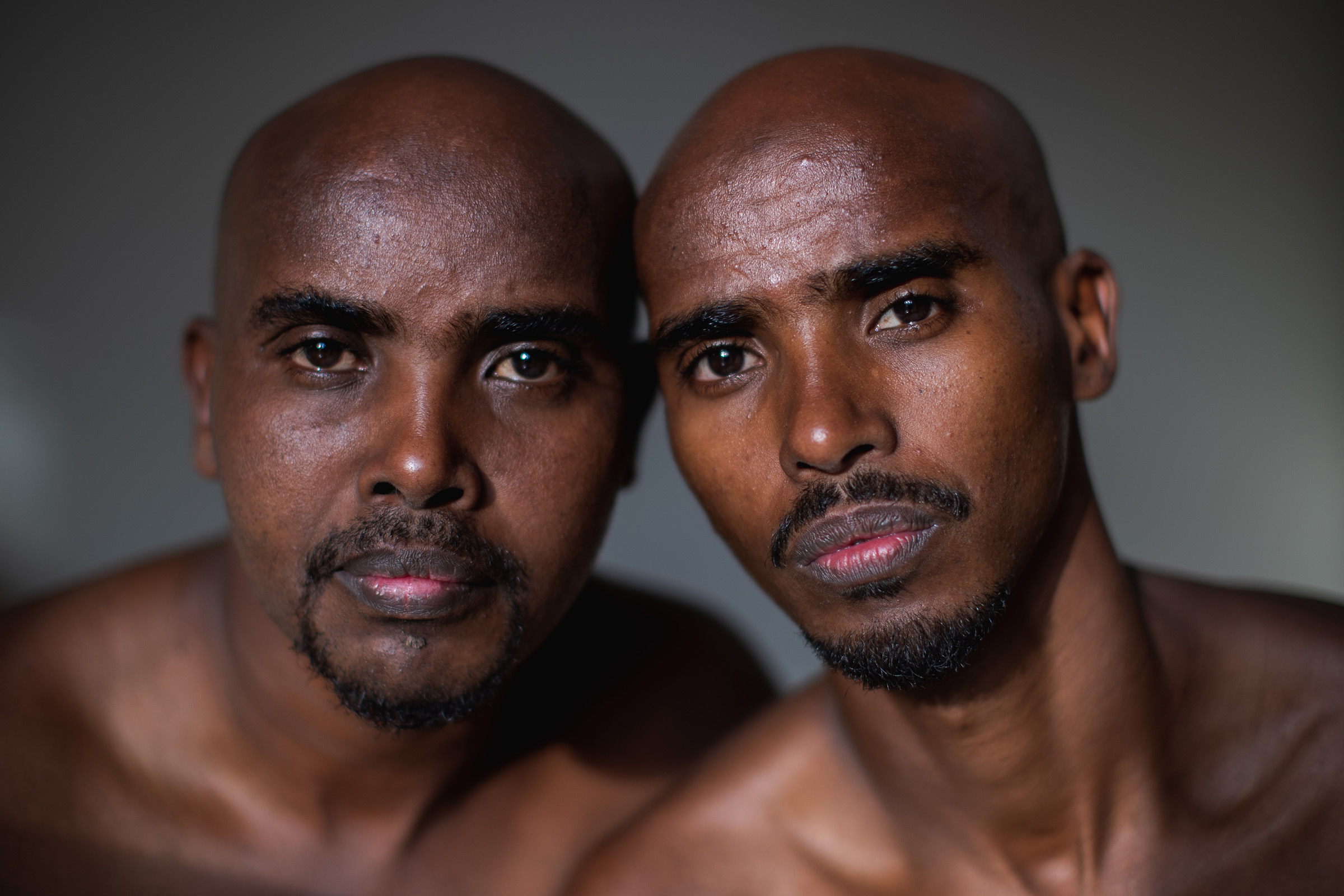
Sir Mo Farah and his twin brother, Hassan, sit shoulder to shoulder against a grey studio backdrop in Weybridge on 18 July 2019, their faces almost mirror images of each other. The two were inseparable as small children in Somaliland, and it was with his brother that Farah was sent to live with an uncle in neighbouring Djibouti — before the woman arrived, and only one of them was taken.