
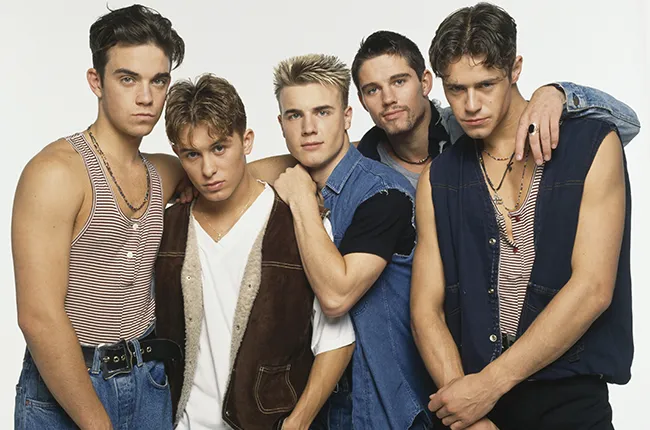
Secret About ‘Take That’ We All Missed

1. Take That Was Originally Formed Through Auditions
Take That didn’t begin as a group of friends coming together naturally — they were carefully assembled through auditions in Manchester in 1990. Manager Nigel Martin-Smith wanted to create a British boyband with the charisma of New Kids on the Block, and he selected members not only for their singing ability but for their stage appeal. This manufactured beginning is something many fans overlook, but it played a huge role in shaping their early image.Advertisement
2. Gary Barlow Was Always the Musical Backbone
From the very start, Gary Barlow wasn’t just another member — he was the group’s primary songwriter and musical anchor. While other boybands relied heavily on outside writers, Take That quickly gained respect because many of their biggest hits were written by Gary himself. This gave them a level of authenticity that helped separate them from other pop acts of the era.Advertisement
3. Robbie Williams Wasn’t the Obvious Star at First
Although Robbie Williams later became one of the biggest solo stars in the world, he wasn’t immediately seen as the standout member in Take That’s early days. In the beginning, he often struggled to find his place within the group and felt overshadowed by Gary’s songwriting and Mark’s strong fanbase. His eventual rise was far from guaranteed.Advertisement
4. Their First Breakthrough Came in the Gay Club Scene
One of the lesser-known facts about Take That’s early career is that they built their initial fanbase performing in gay clubs and venues. Their energetic dance routines and charisma made them popular within that community before they became mainstream teen idols. This part of their history is rarely highlighted but was crucial to their success.Advertisement
5. Take That Was Meant to Be Britain’s Answer to American Boybands
The group was deliberately created to compete with the American pop explosion of the late 80s and early 90s. Their image, choreography, and even marketing strategy were inspired by U.S. acts. However, Take That quickly evolved beyond imitation, eventually becoming a uniquely British phenomenon.Advertisement
6. Mark Owen Was Once the Most Popular Member
Many people today associate Take That with Robbie or Gary, but during the height of their early fame, Mark Owen was often considered the “heartthrob” of the group. His boyish charm earned him massive popularity, and he frequently topped fan polls. His role as the quiet favorite is a detail many modern fans miss.Advertisement
7. Their Songwriting Helped Them Gain Longevity
Unlike many boybands whose careers faded quickly, Take That’s ability to write emotional, timeless songs helped them last. Tracks like “Back for Good” and “A Million Love Songs” weren’t just catchy — they had depth. This strong musical foundation allowed them to mature with their audience.Advertisement
8. “Back for Good” Was a Global Smash Beyond the UK
While Take That were already huge in Britain, “Back for Good” launched them internationally. The song topped charts in multiple countries and became their signature hit. Many don’t realize just how big this track was worldwide, giving them success far beyond boyband stereotypes.Advertisement
9. Robbie Left at the Peak of Their Fame
One of the most shocking moments in pop history was Robbie Williams leaving Take That in 1995 — right when they were at their absolute peak. His departure wasn’t just a band change; it became a cultural event in the UK. Fans were devastated, and it marked the beginning of the group’s collapse.Advertisement
10. Their Split Caused Real National Mourning
When Take That announced their breakup in 1996, it was treated almost like a national tragedy. There were reports of helplines being set up for grieving fans, and headlines compared it to heartbreak on a massive scale. Few pop breakups have ever had that kind of emotional impact.Advertisement
11. Gary Barlow Struggled Deeply After the Band Ended
After the split, Gary Barlow faced intense public pressure and personal struggles. His solo career didn’t immediately match the success of Take That, and he has spoken openly about difficult years that followed. Many assume he smoothly transitioned, but the reality was far more complex.Advertisement
12. Robbie and Gary’s Feud Was Very Real
The tension between Robbie Williams and Gary Barlow wasn’t just tabloid gossip — it was a genuine rift that lasted for years. Harsh comments were made publicly, and their reconciliation was one of the most surprising moments in Take That’s later history.Advertisement
13. Their Comeback Was Unexpectedly Massive
When Take That reunited in 2005 (without Robbie at first), many expected only mild nostalgia success. Instead, they returned as one of the UK’s biggest stadium-filling bands. Their comeback wasn’t just a reunion — it was a full-scale reinvention.Advertisement
14. “Patience” Marked Their New Era
The release of “Patience” in 2006 proved Take That were no longer just a boyband. The song was mature, emotional, and aimed at an adult audience. It became a massive hit and showed the group had evolved musically.Advertisement
15. They Became Even Bigger as Adults
Few groups manage to grow beyond their teen fanbase, but Take That did exactly that. Their reunion era brought in older fans and new listeners alike, proving their appeal wasn’t limited to youthful pop trends.Advertisement
16. Robbie’s Return Was One of the Biggest Pop Moments Ever
When Robbie Williams officially rejoined in 2010, it became one of the most celebrated reunions in British music history. Fans who thought it would never happen were stunned, and the excitement turned their album and tour into record-breaking successes.Advertisement
17. Take That’s Tours Are Among the Most Spectacular in the UK
Take That aren’t just known for music — they’re known for extraordinary live shows. Their tours feature jaw-dropping staging, technology, and storytelling, making them some of the most ambitious concert productions in British pop history.Advertisement
18. Jason Orange Quietly Left the Band
Unlike Robbie’s dramatic departure, Jason Orange left Take That in 2014 in a much quieter way. He stepped away from fame completely, choosing privacy over celebrity. His exit remains one of the most understated yet significant changes in the band’s history.Advertisement
19. The Band Continued Successfully as a Trio
Even after losing members, Take That managed to keep going. Gary, Mark, and Howard carried on as a trio, releasing new music and continuing tours, proving the group’s resilience and lasting popularity.Advertisement
20. They Have Sold Over 45 Million Records Worldwide
Many people underestimate Take That’s global success, but they have sold tens of millions of records worldwide. Their influence goes far beyond the UK, making them one of the most successful British pop acts ever.Advertisement
21. They Won More BRIT Awards Than Most Bands
Take That have collected a staggering number of BRIT Awards, cementing their place as one of Britain’s most decorated music groups. Their award history reflects decades of impact.Advertisement
22. Their Fanbase Has Spanned Multiple Generations
What began with screaming teenage fans in the 90s has transformed into a multi-generational audience. Parents who adored Take That in their youth now bring their children to concerts.Advertisement
23. Take That Helped Redefine British Pop Stardom
They weren’t just a band — they were a cultural movement. Take That played a huge role in defining what modern British pop success could look like.Advertisement
24. Their Music Shifted From Pop to Adult Contemporary
Over the years, their sound matured, moving away from pure dance-pop into more sophisticated adult ballads and pop-rock influences, allowing them to stay relevant.Advertisement
25. Gary Barlow Became a Major Songwriter for Others
Beyond Take That, Gary wrote songs for many other artists, expanding his reputation as one of Britain’s most talented songwriters.Advertisement
26. Howard Donald Became a DJ and Producer
Howard explored a different musical path outside Take That, embracing electronic music and DJ culture, which many fans may not know.Advertisement
27. Mark Owen Released Multiple Solo Albums
Mark quietly maintained a solo career alongside the band’s success, releasing several albums that showed a softer, indie-influenced style.Advertisement
28. Take That Inspired Future Boybands
Groups like One Direction and Westlife followed in Take That’s footsteps. Their blueprint for success shaped the future of British boybands.Advertisement
29. They Remain One of the UK’s Greatest Live Acts
Decades into their career, Take That are still praised for their energy, professionalism, and ability to connect emotionally with audiences.Advertisement
30. Their Legacy Is Far Bigger Than the Boyband Label
While many still call them a boyband, Take That have long outgrown that category. Their career spans generations, genres, and musical eras, proving they are true British pop legends.Take That’s story is filled with surprising twists, emotional moments, hidden beginnings, and reinventions that many fans never fully noticed. Their journey remains one of the most remarkable in music history.Advertisement